Understanding Nance-Horan Syndrome
Vision at BirthNearly all children with NHS are born with dense congenital cataracts, which cloud the lens of the eye and require surgery — typically around 2-3 months of age — to preserve developing vision. Many children also have microphthalmia (smaller eyes) and microcornea (smaller corneas), along with strabismus (eye misalignment) and nystagmus (involuntary eye movement). These features are present from birth and are part of what makes early diagnosis and treatment so important.
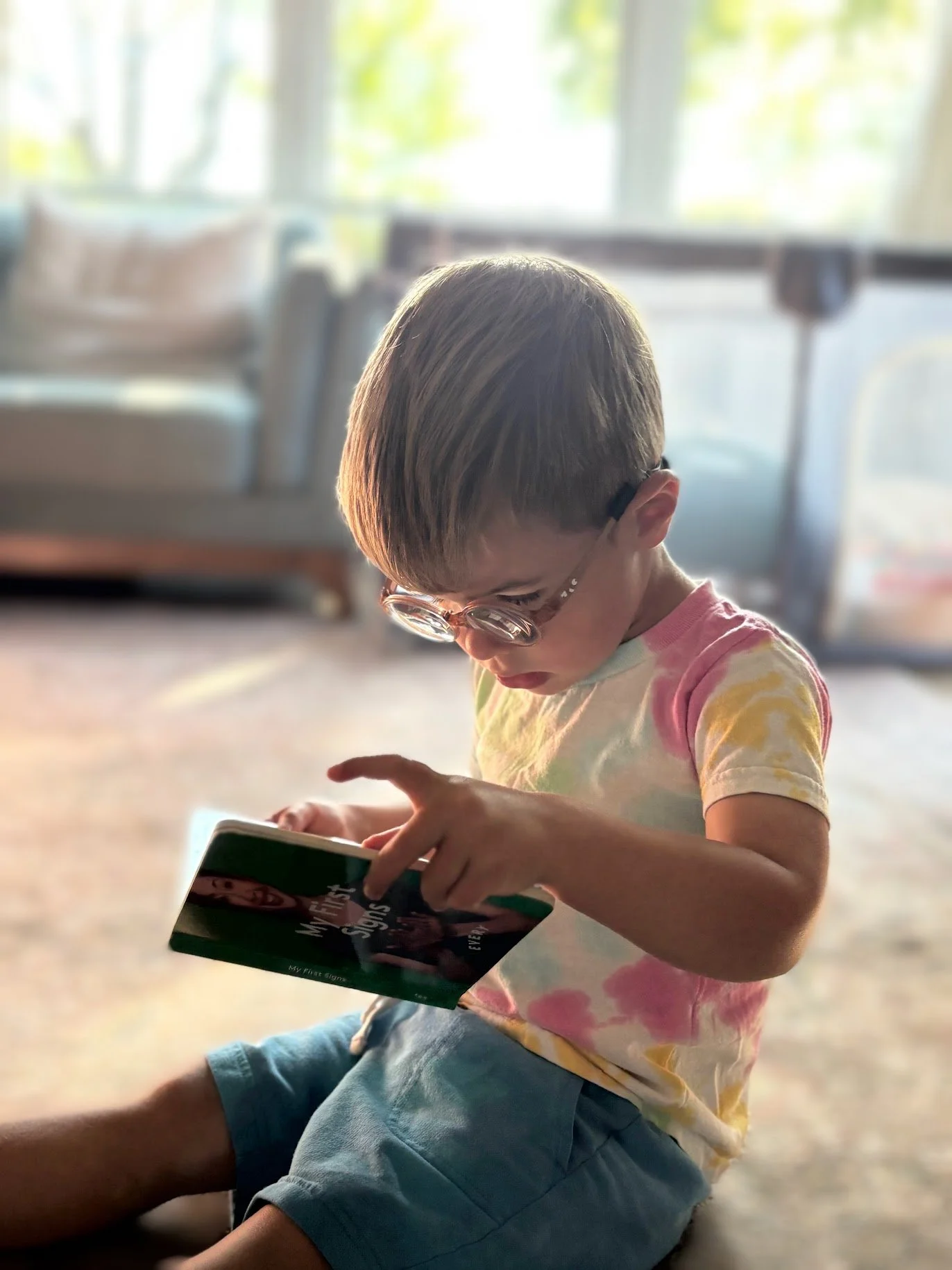
Ongoing Eye CareAfter cataract surgery, some children develop glaucoma and need lifelong monitoring for elevated eye pressure. Vision correction is individual to each child — some children wear contact lenses, others wear glasses, and some use both together at different stages. Regular ophthalmology visits are a long-term part of life with NHS, but with consistent care, many children achieve good vision.
Dental DifferencesNHS often affects teeth as well as eyes. Children may have supernumerary teeth (extra teeth), weaker enamel, or atypically shaped teeth. These differences tend to become more pronounced in adult (permanent) teeth than in baby teeth, so a dentist familiar with syndromic dental differences can help families plan ahead for orthodontic and dental care as their child grows.
Motor DevelopmentSome young children with NHS experience delays in gross motor skills (like sitting, crawling, and walking) and fine motor skills (like grasping small objects or early writing). These delays are often addressed through physical and occupational therapy, and many children make significant progress with early intervention.
Behavioral & Developmental PatternsSome children with NHS show behavioral patterns consistent with ADHD or autism spectrum traits. Every child's experience is different — some children have no behavioral differences at all, while others benefit from early evaluation and support.
Every Child is DifferentNHS affects each child differently, and no two experiences look exactly alike. Some children face more of these challenges; others face fewer. What we hear again and again from families further along this path: early intervention, a strong care team, and connection with other NHS families make an enormous difference in outcomes and in how manageable this all feels.